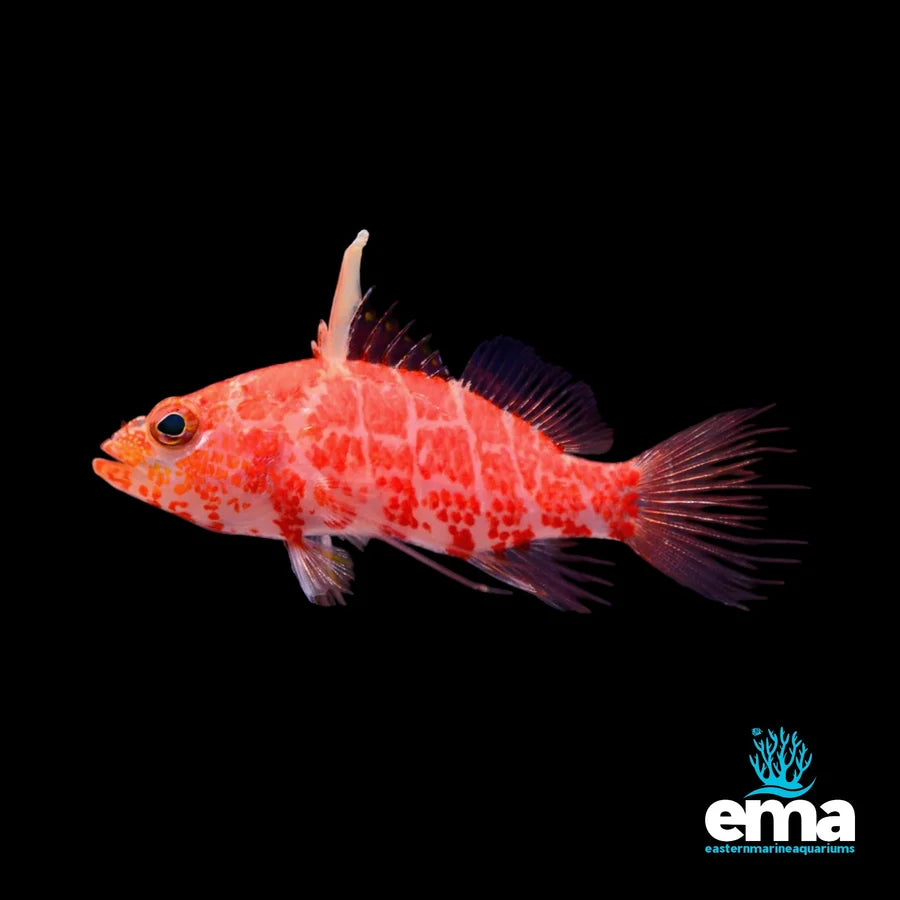
Geometric Pygmy Hawkfish
(So Stunning we had to talk the boss out of keeping him.)
Scientific Name: Plectranthias inermis
Also Known As: Hi Fin Perchlet
Care Level: Expert
Temperament: Peaceful to Semi-Aggressive
Diet: Carnivore
Reef Safe: Yes – with caution around very small crustaceans
Minimum Aquarium Size: Approx. 75L+
Maximum Size: Approx. 5cm
Origin: Indo-Pacific
The Geometric Pygmy Hawkfish (Plectranthias inermis) is a small and highly distinctive marine fish, combining striking orange-red and white patterning with brilliant green eyes and a prominent elongated dorsal spine.
Despite its common name, the Geometric Pygmy Hawkfish isn't actually a true hawkfish. It belongs to the Anthiinae group but has earned its name from its hawkfish-like appearance and behaviour. Rather than constantly swimming through the water column, it prefers to perch amongst rockwork, watching its surroundings before darting out for food.
Aquarium Care
Geometric Pygmy Hawkfish are well suited to established marine and reef aquariums with plenty of live rock, caves and sheltered areas. Their small adult size makes them an excellent choice for reef keepers wanting an unusual fish without adding a large species to the aquarium.
They are generally peaceful but can become territorial towards similarly sized bottom-dwelling fish. Care should also be taken with very small ornamental shrimp and crustaceans, which may be viewed as food.
A secure aquarium lid is recommended.
Feeding
The Geometric Pygmy Hawkfish is a carnivore that naturally feeds on zooplankton and small prey. Offer a varied diet including:
-
Mysis shrimp
-
Enriched brine shrimp
-
Quality frozen marine foods
-
Finely chopped shrimp or seafood
-
Suitable high-quality meaty prepared foods
Small, regular feeds and a varied diet will help maintain excellent condition and colour.
Why We Like Them
If you're looking for something a little different for your reef tank, the Geometric Pygmy Hawkfish is a brilliant option. They're small, colourful, full of character and fascinating to watch, especially when perched amongst the rockwork waiting for their next meal.